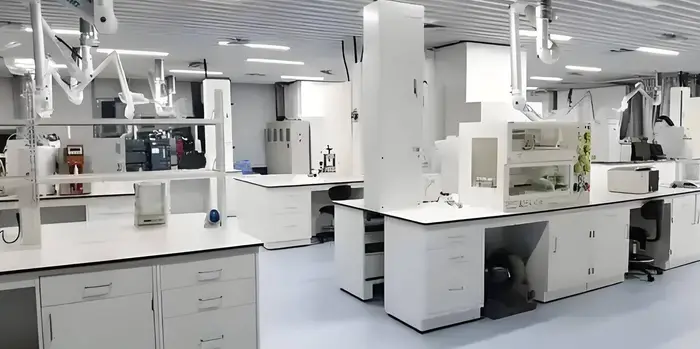







Cell and Gene Therapy (CGT):Why Customized Cleanrooms Are Essential
Their engineered cleanroom wall, cleanroom wall panel, and cleanroom ceiling panel components are pre-fabricated to exact tolerances—ensuring consistent particulate control, chemical resistance, and easy decontamination.
CGT Facilities Demand Precision-Built Environments
Cell and gene therapy (CGT) manufacturing imposes extraordinary demands on facility design—far beyond standard biopharma requirements. With viral vectors, autologous cells, and ultra-sensitive processes, even minor environmental fluctuations can compromise product safety, potency, or regulatory compliance. That’s why off-the-shelf cleanrooms rarely suffice. CGT facilities require fully customized cleanroom solutions: precisely sized ISO Class 5–7 suites, segregated process zones, rapid reconfiguration capability, and seamless integration of HVAC, utilities, and containment systems.
At the core of this customization lies the modular laboratory buildings. Unlike traditional stick-built facilities, modular cleanroom systems deliver speed-to-operation without sacrificing control or quality. Their engineered cleanroom wall, cleanroom wall panel, and cleanroom ceiling panel components are pre-fabricated to exact tolerances—ensuring consistent particulate control, chemical resistance, and easy decontamination. For high-risk aseptic fill-finish or open-process vector production, the integrity of every joint, seal, and surface matters. That’s where purpose-built clean room sandwich panel systems shine: non-porous skins, antimicrobial coatings, and validated airflow interfaces eliminate hidden harborage points for microbes or residuals.
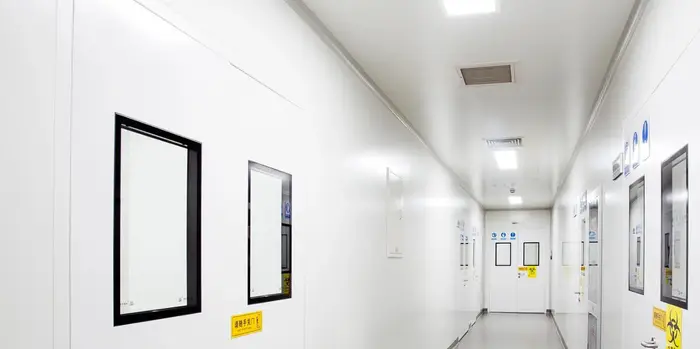
Why “Custom” Means More Than Just Dimensions
Customization in CGT isn’t just about footprint or ceiling height—it’s about operational resilience. A true custom cleanroom anticipates future scale-up, technology shifts (e.g., from static to closed-system processing), and evolving regulatory expectations (FDA’s CMC guidance, EMA’s ATMP Annexes). This means designing with modularity at the system level: wall panels that accept integrated sensors, ceiling panels with plug-and-play light and HEPA interface options, and structural frames that support robotic transport or mobile isolators.
For engineering teams evaluating suppliers, look beyond aesthetics or lead time. Ask how their cleanroom wall panel handles repeated VHP cycles—or whether their cleanroom ceiling panel supports ≥99.995% @ 0.3 µm filtration with zero gasket degradation over 10 years. The right partner doesn’t sell panels; they engineer continuity—from concept through validation—and ensure every clean room sandwich panel performs as a verified component of your quality system.