







Central Kitchen Upgrade:Why Class 100,000 Cleanrooms Are Becoming a Trend
The latest wave centers on cleanroom ceiling grid system integration with modular clean room panels. Unlike legacy stick-built rooms, today’s Class 100,000 spaces use standardized wall and ceiling interfaces that support rapid deployment, tooling changes, and ISO-compliant airflow validation—all within 4–6 weeks.
Modular Flexibility Meets Aerospace Precision
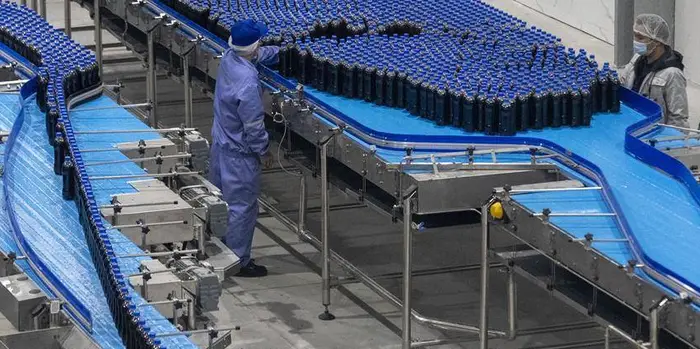
Across North America and Asia, aerospace manufacturers are rethinking central utility zones—not as static infrastructure, but as scalable, reconfigurable environments. The latest wave centers on cleanroom ceiling grid system integration with modular clean room panels. Unlike legacy stick-built rooms, today’s Class 100,000 spaces use standardized wall and ceiling interfaces that support rapid deployment, tooling changes, and ISO-compliant airflow validation—all within 4–6 weeks. Leading suppliers now offer pre-tested cleanroom panel systems with embedded grounding paths, fire-rated cores (ASTM E84 Class A), and seamless FFU mounting—eliminating field-cutting delays. What sets aerospace adopters apart is their insistence on structural tolerance ≤±0.5 mm per 3 meters: a benchmark met only by factory-assembled T-grid subframes and precision-machined aluminum extrusions. This isn’t just speed—it’s repeatability under audit.
FFU Integration Without Compromise

At the heart of every high-integrity Class 100,000 space lies uniform laminar flow—and that starts at the ceiling. The FFU T grid has evolved beyond basic support into an engineered airflow management layer. Modern cleanroom T grid systems integrate gasketed FFU flanges, integrated light diffusers, and service raceways for power/data—all while maintaining ≥92% open area ratio. Crucially, these grids are designed to bolt directly to modular clean room panels, eliminating floating ceilings or secondary suspension. For engineering teams sourcing turnkey solutions, compatibility isn’t optional: it’s verified pre-shipment via laser-scanned alignment reports and airflow mapping simulations. When paired with low-particulate, non-shedding cleanroom panel surfaces (tested per IEST-RP-CC003.4), the result is a validated environment ready for composite layup, avionics testing, or propulsion assembly—no retrofitting required. That’s why top-tier aerospace integrators no longer ask “Can it be modular?” They ask “Which cleanroom ceiling grid meets our vibration specs and particle decay protocol?”
