







Hydrogen Fuel Cell Proton Exchange Membrane Production:Why an Extremely Stringent Environment Is Required
What works is a fully sealed, pressure-staged clean room false ceiling system paired with HEPA/ULPA filtration, stainless-steel ducting, and static-dissipative cleanroom wall panel surfaces.
Why PEM Manufacturing Demands Class 100 (ISO 5) or Better
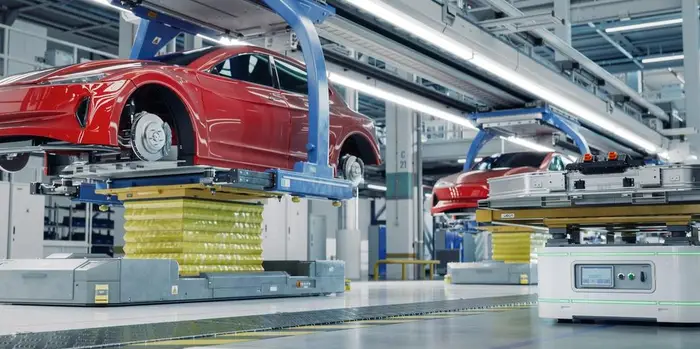
Proton exchange membranes (PEMs) are the heart of hydrogen fuel cells—ultra-thin, chemically sensitive polymer films that must conduct protons with near-zero impurity interference. A single particle of dust, trace metal ion, or volatile organic compound can disrupt membrane uniformity, accelerate degradation, or cause catastrophic cell failure under operational stress. That’s why leading PEM producers—especially those supplying Tier 1 automotive OEMs—require continuous Class 100 (ISO 5) environments during coating, drying, and lamination. Unlike general electronics manufacturing, PEM processes involve solvent-based casting and high-humidity curing steps where airborne molecular contamination (AMC) and particulate ingress pose dual threats. Standard HVAC systems fall short. What works is a fully sealed, pressure-staged clean room false ceiling system paired with HEPA/ULPA filtration, stainless-steel ducting, and static-dissipative cleanroom wall panel surfaces. Wall integrity matters: seams, penetrations, and thermal bridging in low-spec cleanroom wall assemblies become contamination vectors over time. That’s why forward-thinking engineering teams specify welded-seam, non-porous clean room sandwich panel systems—not just for compliance, but for long-term yield stability.
Modular Cleanrooms: Speed, Certifiability & Seamless Integration
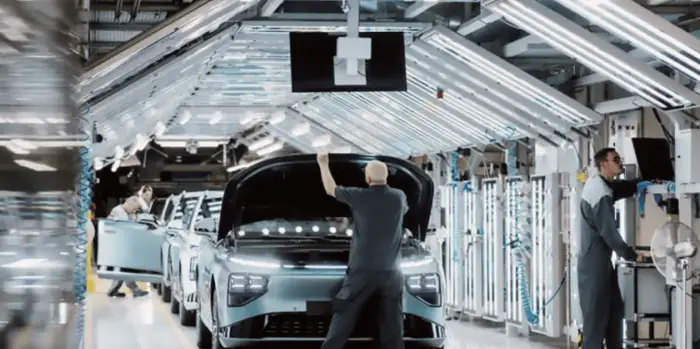
Automotive suppliers face aggressive ramp timelines—often under 6 months from design sign-off to first qualified PEM batch. Traditional stick-built cleanrooms introduce scheduling risk, field-welding inconsistencies, and certification delays. The proven alternative? Pre-engineered modular clean room panels, factory-certified to ISO 14644-1 and tested for air-tightness, surface resistivity, and chemical resistance. Top-tier cleanroom manufacturers now offer plug-and-play solutions with integrated FFUs, lighting, and monitoring ports—designed to bolt directly onto existing factory slabs. Critical detail: ceiling integration isn’t an afterthought. A seamless interface between cleanroom ceiling panel and wall system eliminates the “cold bridge” gap where condensation and microbial growth begin. For PEM lines, that means fewer unplanned shutdowns, faster qualification audits, and lower total cost of ownership over five years. When every square meter supports $2.8M/year in fuel cell output, precision in the envelope isn’t overhead—it’s yield protection.
