







Rapid Deployment of Automotive Paint Booth Cleanrooms Using Modular Wall and Ceiling Systems
How automotive manufacturers are using modular cleanroom systems to deploy paint booth environments in weeks instead of months, reducing production line downtime and launch delays.
In automotive manufacturing, the paint booth is where product quality meets customer perception. Even microscopic contamination in the paint application zone can cause defects that require expensive rework or result in warranty claims. When production lines need new paint booth cleanrooms or upgrades to existing facilities, speed of deployment becomes critical. Modular cleanroom systems are enabling automotive manufacturers to compress what used to be multi-month construction projects into deployments measured in weeks.
The Modular Advantage: Factory-Built, Site-Assembled
The core principle behind rapid cleanroom deployment is shifting as much work as possible from the construction site to the factory. Modular cleanroom panels are manufactured to precise dimensions with all cutouts for windows, doors, and service penetrations completed before shipment. On site, the installation team simply connects panels using integrated joining systems, creating walls and ceilings with a fraction of the labor and time required for conventional construction.
This approach is particularly valuable in automotive settings where production schedules are measured in units per hour and any downtime carries enormous cost. Modular clean room wall systems can be installed around existing production equipment with minimal disruption. The dry assembly process generates no dust or debris that could contaminate adjacent manufacturing zones.
Ceiling systems follow the same modular philosophy. Pre-engineered grid sections with integrated lighting and filtration mounting points drop into place on adjustable suspension systems. The entire envelope, walls, ceiling, and services can be completed in a timeframe that would traditionally be spent just on the structural frame.
Paint Booth Specific Requirements and How Modular Systems Address Them
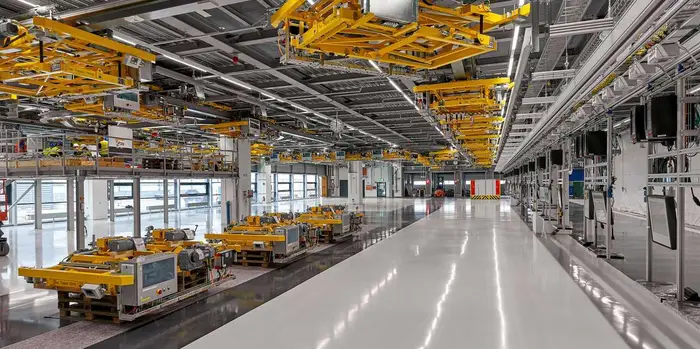
Automotive paint booths have specific environmental requirements that go beyond standard cleanroom specifications. Temperature must be maintained within tight bands, typically 22 plus or minus 2 degrees Celsius, to ensure proper paint viscosity and flash-off characteristics. Humidity control prevents solvent blushing and other moisture-related defects. The modular system must accommodate these requirements through integrated HVAC connections and sealed panel joints.
Airflow design in paint booth cleanrooms follows a cross-draft or down-draft pattern to carry overspray away from the vehicle surface. Modular ceiling panels with perforated faces enable uniform down-draft distribution across the painting zone. The clean room sliding door entries are designed with rapid closure mechanisms and air curtain systems to maintain pressure differentials during vehicle movement.
Fire safety is paramount in paint environments where flammable solvents are present. Modular panels for paint booth applications must use non-combustible core materials, typically rock wool or specialized fire-rated formulations. All electrical penetrations require explosion-proof fittings, and the panel system must provide continuous grounding paths for static dissipation.
Real-World Deployment Timelines and Lessons Learned
A major automotive OEM in Southeast Asia recently deployed three modular paint booth cleanrooms in just six weeks, a process that would have taken five months using traditional construction. The key to this acceleration was parallel processing: while site preparation and floor coating were underway, the panel manufacturer was fabricating the modular components. Installation began the day the components arrived.
The project team identified several critical success factors. First, precise site surveying before ordering panels ensured that every component fit correctly on the first attempt. Second, having a dedicated installation supervisor trained by the panel manufacturer prevented assembly errors that could compromise cleanroom performance. Third, pre-planning service routes for electrical, compressed air, and ventilation ducts within the panel system eliminated field modifications.
For automotive project managers evaluating modular cleanroom approaches, the recommendation is clear: engage with experienced modular clean room supplier partners early in the planning process. Their engineering input on panel layout, service integration, and installation sequencing is what transforms a good concept into a rapid, successful deployment.
